Activity #24 Research Use Cases of List Data Structures in Python

Introduction
In Python, a list is a built-in data structure that allows developers to store and manage an ordered collection of items. Unlike arrays in other languages, Python lists are versatile and can contain elements of different data types, including integers, strings, and even other lists. Lists are mutable, meaning that elements can be added, removed, or modified after the list is created. This flexibility makes lists a cornerstone of Python programming, offering solutions to various real-world challenges.
1. Storing Sequences of Data
Lists excel at storing sequences of data where the order is significant. This could include anything from user input to measurement readings.
Example
Consider an application that requires storing daily temperature readings:
# Storing temperatures for the week
temperatures = [22.5, 23.0, 21.8, 24.0, 25.3, 26.5, 27.1]

# Calculating average temperature
average_temp = sum(temperatures) / len(temperatures)
print(f"Average Temperature for the week: {average_temp:.2f}°C")

Benefits
This usage allows for easy collection and manipulation of data with list methods, such as append() and remove().
2: Iterating Over Elements
Lists are particularly useful for looping through elements. Creating an iteration index or using list comprehension can significantly simplify tasks involving multiple data points.
Example
Imagine an application that displays a list of users:
users = ["Alice", "Bob", "Charlie", "Diana"]
# Iterating through a List of users
for user in users:
    print (f"Welcome, {user}!")
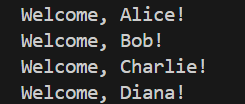
This code will print a welcome message for each user in the list, demonstrating how easily lists can be traversed.
3: Implementing Stacks and Queues
Lists can be used to implement stack and queue data structures. A stack allows for Last In First Out (LIFO) operations, while a queue operates on a First In First Out (FIFO) principle.
Example: Stack
stack = []
# Push items onto the stack
stack.append ("A" )
stack.append(" B")
stack.append ("C")
# Pop an item from the stack
last_item = stack.pop ()
print (f"Popped item: {last_item}") # outputs 'C'

Example: Queue
from collections import deque
queue = deque ()
# Enqueue items
queue.append("A")
queue.append(" B")
queue.append("C" )
# Dequeue an item
first_item = queue. popleft ()
print (f"Dequeued item: {first_item}") # outputs 'A'

Benefits
Using lists for stacks and queues simplifies the underlying implementation and improves performance for frequent data manipulations.
4: Handling Dynamic Data Sets
Lists adapt excellently to changing data requirements, making them perfect for handling dynamic datasets.
Example
For an e-commerce application, you might need to manage a shopping cart that can grow or shrink based on user actions.
shopping_cart = []
# Adding items to the cart
shopping_cart.append(" T-shirt")
shopping_cart.append("Jeans")
# Removing an item from the cart
shopping_cart.remove("T-shirt")
print (f"Items in cart: {shopping_cart}")

Benefits
This capability allows easy updates and flexible data management as users modify their cart without needing to redefine the structure constantly.
5: Advanced Data Handling with Lists
Lists are often used to handle complex data manipulations, such as aggregating, filtering, and transforming collections of data.
Example
Let’s say you want to filter a list of numbers to find only those that are even:
numbers = [1, 2, 3, 4, 5, 6, 7, 8, 9, 10]
even_numbers = [num for num in numbers if num % 2 == 0]
print (f"Even numbers: {even_numbers}")

Benefits
Using list comprehensions instead of traditional loops makes the code cleaner, more readable, and often more efficient.
- Lists are a cornerstone of Python programming, providing versatility and ease in managing collections of data. By understanding their key use cases from storing sequences to enabling complex data manipulations developers can leverage this powerful data structure to create efficient and effective solutions across various applications. Whether you’re iterating through a dataset or managing a shopping cart, lists offer a straightforward approach to handling data while remaining intuitive to use.
References:
https://www.studysmarter.co.uk/explanations/computer-science/data-structures/list-data-structure/
https://www.digitalocean.com/community/tutorials/understanding-lists-in-python-3


